Custody and verification are separate questions
A non-custodial wallet gives the user control of the keys needed to spend, but it still needs information about transactions, blocks and spendable outputs. That information may come from a provider's server, a collection of peers or the user's own full node.
Ask two questions separately: who can sign a transaction, and who tells the wallet which transactions and blocks exist? Controlling keys answers the first question but does not automatically answer the second.
Trusted-server wallets are convenient
Many mobile wallets query a hosted backend for address histories and transaction status. This reduces bandwidth and setup time, which can be useful on constrained devices.
The server may learn which addresses or transactions belong to one user. It may also omit information, become unavailable or present an incorrect view. The wallet still prevents the server from spending if private keys remain on the user's device, but network information is partly trusted.
SPV verifies inclusion and accumulated work
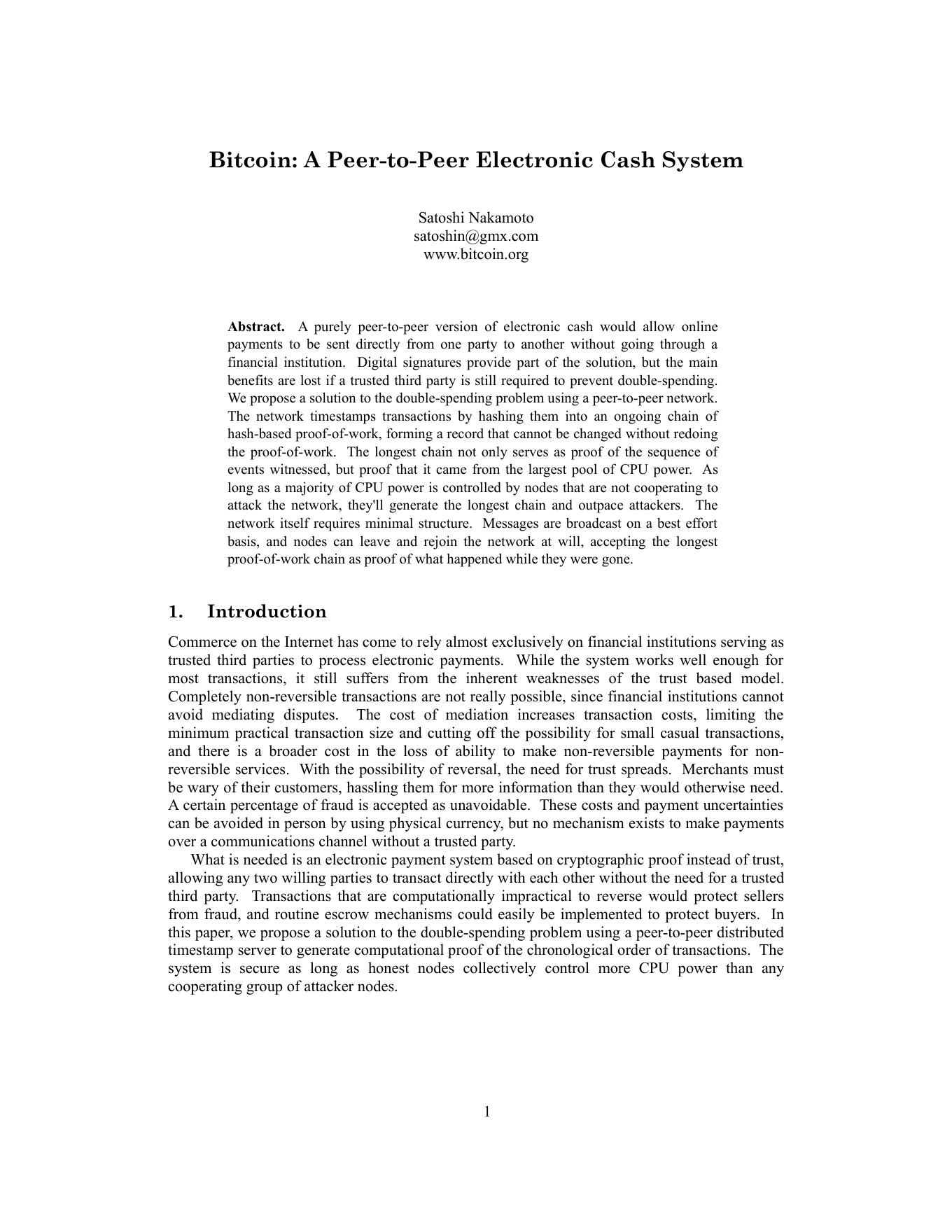
Simplified Payment Verification, described in the Bitcoin white paper, downloads block headers and uses Merkle proofs to check that a transaction was included in a block. The growing chain of headers provides evidence of accumulated proof of work.
SPV does not execute every transaction and block validity rule. A peer can also omit relevant information, and older Bloom-filter designs can reveal wallet interests to peers. Connecting to multiple peers changes some risks but does not turn SPV into full validation.
Compact block filters improve private discovery
BIP157 and BIP158 reverse the older query model: full nodes serve deterministic filters and the client scans them locally. When a filter may match, the client downloads the corresponding block and checks it.
This avoids directly asking a peer for each wallet address, but it uses more bandwidth than a simple server query and still does not reproduce every part of full-node validation. Implementation details and peer diversity remain important.
A full node validates the complete rule set
A full node downloads and validates blocks from the start of the chain, builds its own UTXO set and rejects data that violates its configured consensus rules. A wallet connected to that node can use the user's own validated view instead of a third-party account of the chain.
Pruning can reduce retained block storage without weakening validation: the node still validates historical blocks before discarding older block data. Running a node adds hardware, bandwidth, maintenance and connection responsibilities, so the right model depends on value at risk and the user's threat model.
Visual recap
Four ways a wallet can learn about Bitcoin
Each model changes what is checked locally and what a remote party can learn or misreport.
Hosted server
Header-based SPV
Compact filters
Personal full node
Choose by threat model
Key vocabulary
Terms worth knowing
- Full validation
- Checking every relevant transaction and block rule from the blockchain history rather than trusting a server's result.
- SPV
- Simplified Payment Verification using block headers and inclusion proofs instead of validating every transaction rule.
- Compact block filter
- A privacy-oriented data structure a light client can download and scan locally for potentially relevant block data.
Worked example
Two wallets show the same balance for different reasons
Wallet A asks one hosted server for its history. Wallet B checks header work and scans compact filters from peers. A full-node wallet validates all blocks and rules locally.
- 1Identify who supplies transaction history
- 2Ask what the wallet verifies independently
- 3Assess whether the provider can omit or misreport data
- 4Assess what address information the provider can learn
- 5Choose a model suited to the value and threat level
A familiar balance screen can hide very different security and privacy assumptions.
Common misconceptions
What learners often get wrong
Misconception
A non-custodial wallet verifies everything because it controls the keys.
More accurate
Key custody and blockchain verification are separate. A wallet may control keys while trusting a server for network information.
Misconception
A light wallet is inherently unsafe.
More accurate
It makes explicit trade-offs for constrained devices; users should understand its peer, server, privacy and verification model.
Try it yourself
Audit the trust model of a wallet you use or are considering.
- Find its official architecture documentation
- Record where blockchain data comes from
- Record what is checked locally
- Record what the server can learn
- Check whether a personal-node connection is supported
Use fictional values and public information only. Never enter seed words, private keys or other wallet secrets into a learning exercise.
Key takeaways
- Controlling private keys does not mean a wallet validates every Bitcoin rule.
- Hosted backends are convenient but introduce availability, privacy and information-trust dependencies.
- SPV checks transaction inclusion and proof-of-work without fully validating every transaction rule.
- Compact block filters let clients search locally with different bandwidth and privacy trade-offs.
- A wallet connected to a personal full node can use the user's independently validated chain view.
Lesson recap
Check what you learned
Reveal each model answer, then honestly mark whether you understood it or need another review.
1 of 3
Recall
Why is a non-custodial mobile wallet not necessarily a fully verifying wallet?
References