
The basic idea
Bitcoin is both money and a network
Bitcoin is a digital asset and a global computer network used to record and verify ownership.
The asset is called bitcoin, while the network and protocol are usually referred to as Bitcoin.
Unlike a bank balance, bitcoin is not simply an entry stored in one company's private database.
Copies of Bitcoin's transaction history are maintained and checked by many independently operated computers called nodes.
Simple definition
Bitcoin is an open digital monetary system that lets users hold and transfer value using rules verified by a decentralised network.
Origin
Why was Bitcoin created?
Bitcoin was introduced in 2008 through a document published under the name Satoshi Nakamoto.
The system was designed to allow online payments to move directly between participants without requiring a trusted financial institution to approve and record every transaction.
Bitcoin attempted to solve a difficult problem: how can digital money prevent someone from spending the same unit more than once without relying on one central database?
Its solution combined cryptography, proof-of-work, economic incentives and a distributed network of computers.
Core characteristics
What makes Bitcoin different?
Bitcoin combines several properties that had not previously existed together in one digital monetary system.
Digital
Bitcoin exists as records on a distributed network rather than as physical notes or coins.
Decentralised
No single company, bank or government controls the entire Bitcoin network.
Scarce
Bitcoin has a maximum supply of 21 million coins under its current consensus rules.
Global
Bitcoin can be transferred across borders wherever users can communicate with the network.
Permissionless
Anyone can use the network without needing approval from a central authority.
Verifiable
Users can independently check transactions, supply and network rules by running software.
The blockchain
How does Bitcoin record transactions?
Bitcoin transactions are grouped into batches called blocks.
Each new block references the previous block, creating an ordered history known as the blockchain.
The blockchain records valid transfers of bitcoin and helps the network agree on which coins have already been spent.
Bitcoin nodes independently verify each block before accepting it as part of their copy of the blockchain.
Sending bitcoin
How a Bitcoin transaction works
A Bitcoin payment passes through several stages before it is considered confirmed.
A transaction is created
A user instructs their wallet to send bitcoin to another Bitcoin address.
The transaction is signed
The wallet uses the sender's private key to create a digital signature proving authorisation.
The transaction is broadcast
The signed transaction is shared with computers participating in the Bitcoin network.
Nodes verify it
Bitcoin nodes check that the transaction follows the network's rules and does not spend invalid coins.
A miner includes it in a block
Miners select valid transactions and attempt to add them to the blockchain.
Confirmations accumulate
Additional blocks built after the transaction make reversing it increasingly difficult.
Bitcoin ownership
Bitcoin is controlled using private keys
Bitcoin is not stored inside a wallet in the same way that cash is stored inside a physical wallet.
The blockchain records which bitcoin can be spent under particular conditions.
A private key allows a user to create a valid digital signature authorising a transaction.
Whoever controls the private key can generally control the associated bitcoin, which is why key security is essential.
Bitcoin supply
Why are there only 21 million bitcoin?
Bitcoin's software rules define how new bitcoin enters circulation.
Miners can receive newly issued bitcoin when they successfully add a valid block to the blockchain.
The amount issued per block is reduced after every 210,000 blocks—roughly every four years—in an event called the halving.
This schedule gradually reduces new issuance until the total supply approaches 21 million bitcoin. Full nodes enforce both the issuance schedule and the maximum supply.
Important distinction
The 21 million limit is enforced by the network's consensus rules. Changing it would require users and node operators to accept different rules.
Proof-of-work
What role do miners play?
Miners collect valid transactions and compete to create the next block.
They perform repeated computations as part of Bitcoin's proof-of-work system.
The successful miner broadcasts a proposed block to the network.
Nodes then verify the block and reject it if it breaks Bitcoin's rules.
Network participants
Who keeps Bitcoin operating?
Bitcoin works through the interaction of different participants, each performing a different role.
Users
People and organisations who send, receive, save or use bitcoin.
Wallets
Software or hardware that manages keys and creates Bitcoin transactions.
Nodes
Computers that verify transactions and blocks according to Bitcoin's rules.
Miners
Participants who assemble transactions into blocks and compete to add them to the blockchain.
Decentralisation
No single participant controls Bitcoin
Bitcoin does not have a chief executive, central server or single organisation that can unilaterally change its rules.
Developers can propose software changes, miners can produce blocks and businesses can provide services, but nodes decide which rules they independently enforce.
This balance makes major rule changes difficult without broad support across the network.
Decentralisation is not absolute, but it reduces dependence on any one institution or operator.
Comparing monetary systems
Bitcoin and fiat currency
Bitcoin and fiat currency can both transfer value, but they use different systems for control, supply and verification.
Control
Fiat currency
Managed through governments, central banks and financial institutions.
Bitcoin
Operates through open-source rules enforced by a distributed network.
Supply
Fiat currency
Supply can change through monetary policy and banking activity.
Bitcoin
Follows a predictable issuance schedule with a maximum supply of 21 million.
Transactions
Fiat currency
Digital payments usually pass through banks or payment processors.
Bitcoin
Transactions can be transferred directly across the Bitcoin network.
Verification
Fiat currency
Users generally rely on institutions to maintain account records.
Bitcoin
Users can independently verify the ledger and rules by running a node.
Access
Fiat currency
Access may depend on location, identity requirements and banking services.
Bitcoin
Anyone with compatible software and network access can participate.
Important risks
Bitcoin also involves trade-offs
Bitcoin's price can change sharply as demand, market sentiment, regulation and wider economic conditions change.
Transactions can be difficult or impossible to reverse after confirmation.
Losing access to private keys can result in permanent loss of funds.
Users must learn how to recognise scams and protect their backups.
Bitcoin does not guarantee profits or stable purchasing power over short periods.
Network fees and confirmation times can change depending on demand.
Tax, reporting and usage rules vary by country and can change over time.
Bitcoin units
You do not need to buy a whole bitcoin
Each bitcoin can be divided into 100 million smaller units called satoshis, often shortened to sats.
This divisibility allows users to send or hold very small fractions of one bitcoin.
One bitcoin
100,000,000 sats
Knowledge check
Before continuing
What is the difference between bitcoin the asset and Bitcoin the network?
What problem does the blockchain help Bitcoin solve?
What role does a private key play?
Why do Bitcoin nodes independently verify blocks?
How does new bitcoin enter circulation?
What does decentralisation mean in the Bitcoin network?
How many satoshis are contained in one bitcoin?
Visual recap
A Bitcoin payment from start to finish
A valid payment is signed, shared across the network and confirmed in a block that nodes accept.
Wallet creates
Owner signs
Network relays
Nodes verify
Block confirms
References
Further reading
From the 21Relay Library
Recommended reading for this lesson
Optional books selected to reinforce this topic or provide a useful second perspective.
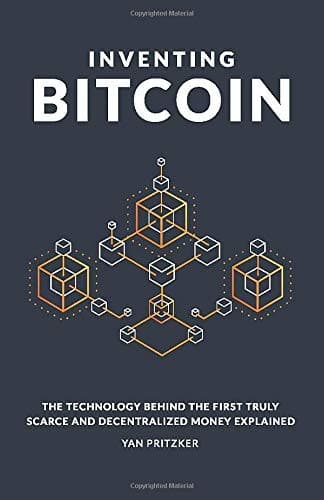 Recommended nextInventing BitcoinYan PritzkerBeginner · Short · EssentialA first technical book about Bitcoin
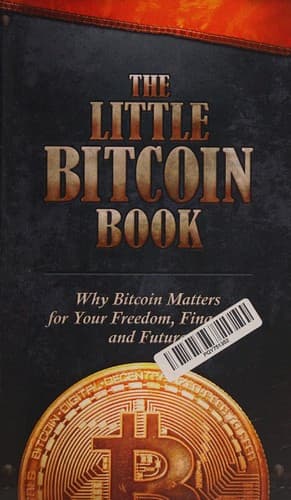 Another perspectiveThe Little Bitcoin BookBitcoin CollectiveBeginner · Short · RecommendedNon-technical readers and discussion groups
Lesson summary
Key takeaways
Bitcoin is both a digital asset and a decentralised monetary network.
Transactions are recorded in an ordered history called the blockchain.
Private keys allow users to authorise the spending of bitcoin.
Nodes independently verify transactions, blocks and network rules.
Miners compete to add valid blocks using proof-of-work.
Bitcoin follows a predictable issuance schedule with a maximum supply of 21 million.
One bitcoin can be divided into 100 million satoshis.
Bitcoin reduces reliance on central financial institutions but introduces its own responsibilities and risks.