
The big picture
Money is a technology
Money is often treated as something permanent, but monetary systems have continually evolved.
Different societies have used livestock, grain, shells, metals, coins, paper notes, bank records and digital balances to represent value.
Each system reflected the technology, institutions and economic needs of its time.
The history of money is therefore also a history of people trying to make exchange more efficient, reliable and scalable.
Before money
Barter made trade difficult
Barter involves exchanging one good or service directly for another.
A farmer might offer grain in exchange for tools, while a craftsperson might trade their labour for food.
The difficulty was finding someone who both wanted what you had and offered what you needed. This limitation is called the double coincidence of wants.
Commodity money
Widely valued goods became exchange tools
To make trade easier, communities began accepting particular goods that many people considered valuable.
Depending on the place and period, this included grain, salt, livestock, shells and other useful or scarce items.
These commodities worked better than simple barter because they could be accepted even when the receiver did not immediately need them.
Monetary evolution
From barter to digital balances
Monetary history was not identical everywhere, but this simplified timeline shows the broad direction of change.
Early trade
Barter
People exchanged goods and services directly, such as food, tools or livestock.
Commodity money
Useful goods became money
Items such as salt, grain, shells and livestock were accepted because they were useful or widely valued.
Metal money
Metals improved trade
Copper, silver and gold became popular because they were durable, divisible and relatively scarce.
Coinage
Standardised coins
Authorities began producing coins with standard weights and markings to make value easier to recognise.
Paper money
Claims replaced heavy metal
Paper notes made large payments easier and often represented a claim on metal held elsewhere.
Fiat currency
Government-issued money
Modern currencies became valuable mainly because governments declared them legal tender and people accepted them.
Digital money
Money became data
Bank balances, cards and mobile payments allowed value to move electronically without physical cash changing hands.
Metal money
Why metals became important
Metals were more durable than food, easier to divide than livestock and more portable than many other commodities.
Gold and silver were particularly valued because they were scarce, recognisable and difficult to produce in large quantities.
However, weighing and testing metal during every transaction was inconvenient. Standardised coins helped solve this problem.
A coin's shape, weight and markings allowed people to more easily recognise its expected value.
Paper money
Paper made large payments easier
Carrying large quantities of metal was heavy, risky and inconvenient.
Paper receipts and notes developed as a lighter way to represent value held elsewhere.
In many systems, notes could originally be redeemed for a stated amount of gold, silver or another asset.
Over time, governments and central banks became more involved in issuing and controlling national currencies.
Modern currency
Money no longer needed metal backing
Most modern national currencies are fiat currencies.
Fiat money is not normally redeemable for a fixed quantity of gold or another commodity.
Its value depends largely on government authority, monetary institutions, economic stability and continued public acceptance.
The next lesson examines fiat currency in greater detail, including how its supply is managed.
Digital transition
Most modern money is already digital
When people use bank transfers, debit cards or mobile payments, physical notes do not usually move between accounts.
Instead, financial institutions update digital records showing who owns what.
This has made payments faster and more convenient, but it also means users depend on banks, payment networks and centralised databases.
Bitcoin introduced a different model: a digital monetary system that can be verified by a distributed network rather than one central institution.
What history teaches us
Monetary systems succeed by solving real problems
Convenience matters
Forms of money tend to improve when they become easier to store, divide, transport and exchange.
Trust matters
People must believe that others will continue accepting the money and that its records or supply can be relied upon.
Scarcity matters
Money can lose purchasing power when its supply expands much faster than demand for it.
Verification matters
Users need a way to distinguish genuine money from counterfeit or invalid units.
Technology changes money
New technologies repeatedly change how money is created, stored and transferred.
Money evolves
No single form of money has remained dominant forever. Monetary systems change with societies and institutions.
Connecting this to Bitcoin
Bitcoin is part of the continuing evolution of money
Bitcoin combines ideas from monetary history with modern cryptography, computer networks and digital verification.
Like earlier forms of money, it must be assessed by its usefulness, scarcity, portability, divisibility and ability to retain value.
Unlike traditional digital money, Bitcoin can be transferred without relying on a single bank or payment company to maintain the central record.
Knowledge check
Before continuing
What limitation made barter difficult?
Why were metals useful as money?
Why did paper notes become more convenient than metal?
How does modern digital money usually move?
What qualities have repeatedly made forms of money useful?
Visual recap
Money changes with society
Each form solved problems of the one before it, while introducing new trade-offs.
Barter
Commodity money
Coins
Paper money
Digital balances
References
Further reading
From the 21Relay Library
Recommended reading for this lesson
Optional books selected to reinforce this topic or provide a useful second perspective.
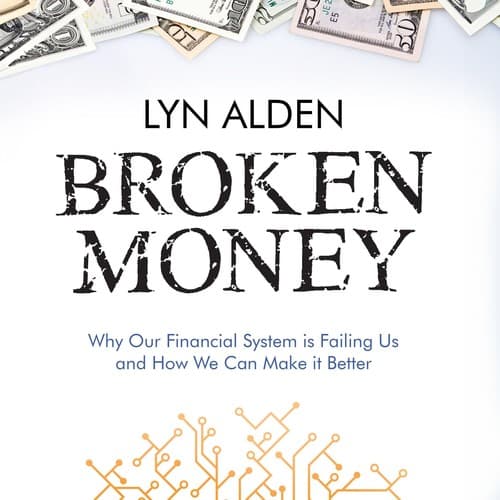 Recommended nextBroken MoneyLyn AldenIntermediate · Long · EssentialReaders asking why money changes
 Another perspectiveDebt: The First 5,000 YearsDavid GraeberAdvanced · Long · ContextualReaders exploring the social history of debt and money
Lesson summary
Key takeaways
Barter was limited by the need for both people to want what the other offered.
Commodity money allowed widely valued goods to serve as exchange tools.
Metals became popular because they were durable, portable, divisible and scarce.
Coins and paper notes made value easier to recognise and transfer.
Modern fiat currencies depend on institutions, government authority and public acceptance.
Most money today exists as digital records maintained by financial institutions.
Bitcoin represents another stage in the technological evolution of money.